Mon, Mar 9, 2026

All Stories

Dangote Refinery Presents First Petrol Sample,Vows to ease Nigeria's fuel crisis


Aliko Dangote, President of Dangote Group, has officially presented the inaugural batch of Premium Motor Spirit (PMS), also known as petrol, from the Dangote Refinery.

The presentation took place on Tuesday via a broadcast at the refinery location in Ibeju-Lekki, Lagos State.

Notably, the 650,000-barrels-per-day refinery successfully conducted a test run, producing the first sample of petrol.

This development is expected to alleviate the ongoing petrol scarcity that has gripped the nation, offering much-needed relief to millions of Nigerians.


“I would like to salute the people of Nigeria and the government of President Bola Tinubu for giving us the platform for growth, development, and prosperity. I also want to thank him personally for creating the idea of the Naira for crude. Doing that will give Naira stability.

“As we have this refinery working, it will show the true consumption of Nigeria; we can track every loaded truck and ship,” he said.

He also said that his refinery will meet the demands of not only Nigerians but also sub-Saharan Africa.

“This refinery will fuel growth, development, and prosperity by supplying energy to our people,” said Aliko Dangote.

‘Quality of our fuel’

On the quality of petrol from the refinery, Dangote assured all citizens that they “are now going to have good petrol, while the engines of your vehicles will last longer.

“You will not be having an engine issue, which a lot of us were having. It won’t happen at all.

“The quality here will match that of anywhere in the world; US, America, we will make sure that nobody will beat us in terms of quality.”

Dangote Refinery Presents First Petrol Sample,Vows to ease Nigeria's fuel crisis

UBA Partners NBA Young Lawyers Forum, to Foster Professional Growth of 50,000 Practitioners  


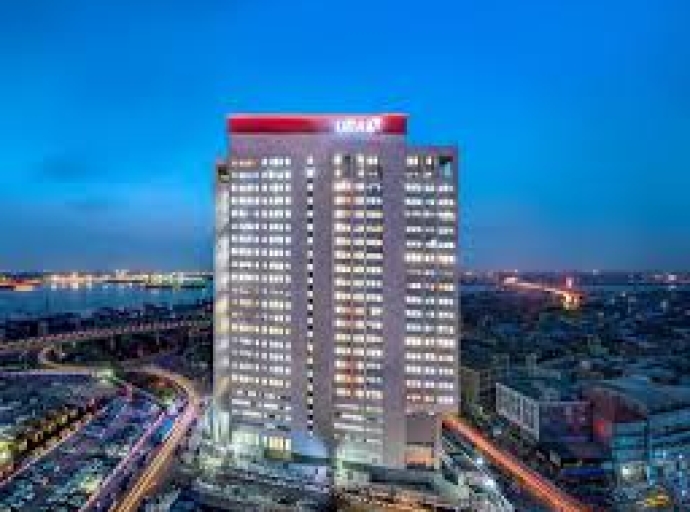
United Bank for Africa (UBA) Plc, has announced a strategic partnership with the Young Lawyers Forum (YLF) of the Nigerian Bar Association (NBA) with the aim to propel the professional development of over 50,000 young legal practitioners across Nigeria, by way of academic sponsorships as well as trainings, with reputable agencies in a bid to enhance their legal careers.


The partnership was announced on Friday, July 24, at the bank’s headquarters, UBA House, in Marina, Lagos. This collaboration aligns with UBA's longstanding commitment to youth empowerment and Nigeria's socio-economic advancement.


Under this initiative, UBA will provide comprehensive support to the NBA-YLF, a subsidiary of the Nigerian Bar Association that represents lawyers with less than 7 years of post-call experience. The bank's involvement is expected to enhance these emerging legal professionals' career trajectories significantly.


 Speaking on the partnership, Group Head, Marketing and Corporate Communications, Alero Ladipo emphasized the bank's dedication to nurturing young talent and in the process strengthening the legal framework that ensures justice is effective in the country. “The partnership with NBA-YLF aligns strategically with UBA's commitment to youth development and community engagement while reinforcing the bank's dedication to fostering professional growth”.


"At UBA, we recognize that empowering the youth is crucial to Nigeria's future growth and advancement”, Ladipo said. “By investing in the professional growth of young lawyers, we're not just supporting individuals; we're strengthening the very fabric of our legal system and, by extension, our nation's development,” she added.


Also speaking, UBA’s Brand Project Manager, Lemachi Chris Asoluka, expressed enthusiasm about the partnership and how such empowerment is invaluable in the present legal landscape.


"This collaboration with UBA marks a significant milestone as it provides unparalleled opportunities for young lawyers to gain the skills and connections necessary to thrive in today's competitive legal landscape." Chris -Asoluka said


UBA Partners NBA Young Lawyers Forum, to Foster Professional Growth of 50,000 Practitioners   

Unity Bank Champions Digital Literacy and Innovation for Youth Empowerment 

In line with its commitment to supporting youth empowerment and technological innovation, and creating opportunities for Nigerian youths to thrive in the digital economy, Unity Bank Plc recently held a high-impact webinar to explore the role of digital technology in sustainable development.

The event drew participants from across Nigeria featuring the Telecommunications, Media and Technology, (TMT) ecosystem including start-ups, players in fintech, content creators, etc.

The event featured two Nigerian technology industry leaders including Mr. Gbolahan Salami, Senior Vice President, Growth, Product, and Strategy at WakaNow, and Mr. Micheal Ogundare, who is the CEO and Co-founder of Crop2Cash. Both speakers shared insightful perspectives on leveraging digital technology to empower the next generation and foster inclusive growth.

Commenting on the International Youth Week webinar, Unity Bank’s Head of Strategy and Innovation, Mr. Ibukun Coker, said that through youth-friendly products, special business grants from the Bank's youth-focused initiatives such as the Corpreneurship Challenge programme as well as other financing packages, the Bank will continue to accord priority to Micro, Small and Medium-sized businesses in technology. 

He added: "Empowering the youth through digital technology is key to unlocking sustainable development in Nigeria. At Unity Bank, we are committed to driving initiatives that bridge the digital divide and equip young people with the skills needed to thrive in today’s fast-evolving economy. This webinar is part of our ongoing effort to support the growth of a digitally inclusive society, ensuring that our youth are well-positioned to harness technology for positive change and economic progress."

The event provided an opportunity for participants to interact directly with the speakers, with many expressing renewed optimism about their potential to leverage digital technology for personal and societal advancement.

Recall that recently Unity Bank partnered with SkillPaddy in its “Count Her In” tech Programme focused on empowering no fewer than 1,000 female beneficiaries in Software Engineering Training. The IT skill development and empowerment initiative was intended to bridge talent supply gaps while providing individuals with the opportunity to meet their training goals and launch careers in the tech industry. About 40 young girls received full sponsorship from the Bank in the special training initiative, which was conceived as part of activities to commemorate this year’s International Women’s Day 2024.

Unity Bank Champions Digital Literacy and Innovation for Youth Empowerment 

FirstBank! Oba Otudeko ,Ex Bank MD Bisi Onasanya accused of massive fraud


Mrs Ezenwa alleges that unsecured loans of roughly N12 billion were given to a company in which Mr Otudeko has significant investment even though the facility was masked as loans to Stallion Group of Companies.

A former employee of First Bank of Nigeria Limited, Adesuwa Ezenwa, has accused billionaire industrialist Pa Oba Otudeko popularly known as ‘Mr Let Us Pray’of massive fraud during his time as chairman of FBN Holdings Plc, the parent company of the bank.

Bisi Onasanya, the bank’s managing director/chief executive officer at the time, was also named in the allegations.

Mrs Ezenwa, who the bank summarily dismissed in October 2016, has initiated legal action against First Bank at the National Industrial Court of Nigeria, Lagos Judicial Division, seeking redress for the termination of her appointment, which she said was done “without any reason whatsoever being offered.”

The former First Bank staffer is, among other reliefs, demanding five hundred million naira in damages and twenty-five million naira in legal costs.

In court documents obtained by PREMIUM TIMES, Mrs Ezenwa alleged that the bank’s credit disciplinary committee made her bear the brunt of granting unsecured loan facilities worth billions of naira to companies in which Mr Otudeko and Mr Onasanya had substantial investments, while her superiors who approved and granted the credit were not so penalised.

She said she joined the bank on 27 May 2002 and became a relationship manager in the corporate banking division of First Bank in February 2016. According to a court paper, in 2010, Mrs Ezenwa worked under the supervision of Abiodun Olatunji, her branch manager at the Adetokunbo Ademola Street, Victoria Island Branch of the bank, and under her group head, Cecilia Majekodunmi.

The document stated that Mr Olatunji later became the group head, while Mrs Majekodunmi became an executive vice president, working closely with and reporting to Mr Onasanya.

“As a relationship manager, I worked under the supervision and direction of my branch manager and group head and signed official correspondence only after they had approved and/or signed same. I had no independent authority in relation to the grant or disbursement of loans or other banking facilities,” Mrs Ezenwa said.

According to the claimant, she executed a large number of documents while she was still employed by First Bank, but only after approval by her bosses and on their direction.

She said she was summoned on 25 August 2015 to appear before a credit disciplinary committee reviewing facilities availed to a company known as Supply and Services Limited, a subsidiary of Royal Ceramics Group, one of the major customers of the bank.

The plaintiff said the committee could not determine whether she had a personal interest in any of the loans granted or whether she made any gain related to her duties. She said she was, however, blamed during proceedings for not whistleblowing on some of the deals endorsed by Mr Olatunji and Mrs Majekodunm

“The admonition was most unfair and unwarranted as I was in no position to whistleblow on my superiors … The persons to whom these reports would have been made were the very persons who were the perpetrators of the misdeeds,” she said.

A litany of allegations against Mr Otudeko

Mrs Ezenwa disclosed that unsecured loans of roughly N12 billion were availed, on one occasion, to a company in which Mr Otudeko has significant investment even though the facility was masked as loans granted to Stallion Group of Companies, which later spotted the false entry in its statement of account and complained.

In one case in 2012, she further alleged, an unsecured credit estimated at N2 billion was granted to Broadwaters Resources Company Nigeria Limited, which ended up being a conduit pipe used by Mrs Majekodunmi and Mr Onasanya to siphon monies from the bank. The claimant said the loan was never repaid.

“Out of the N12 billion camouflaged as lending to the Stallion Group, N8.21 billion was transferred through various accounts to a final destination account belonging to a company known as V-TECH LTD, which belongs to the chairman of FBN Holdings, Oba Otudeko, while the sum of N4.45 billion out of the same fictitious facility was transferred to Ontario Oil and Gas. The facility remains unpaid to date,” Mrs Ezenwa said in court fillings.

According to her, several similar loans were granted by Mr Olatunji and Mrs Majekodunmi, including to Supplies and Services Limited, which were “subsequently sublet and disbursed in smaller bits to several customers on more profitable terms to both officers.”

Swap Technologies and Telecomms Plc, Orbit Cargo, Netconstruct Nigeria Limited, and High-Performance Distributions Limited were among the companies named as beneficiaries of the loan disbursement.

Mrs Ezenwa disclosed that such loans could not have been granted without the involvement of the board of First Bank, considering that the amounts involved were huge and above the approval limits of the executive directors, the vice president and the managing director of the bank.

According to the complainant, her dismissal by the bank brought her into disrepute, threatening her chances of securing employment in reputable companies in future.

“The action of the defendant (First Bank) has consequently caused the claimant untold mental distress and is all the more damaging as the claimant is in her thirties and has simply been made a scapegoat for the malfeasance of some of the lapses of the management of the bank,” she said.

Among other demands, Mrs Ezenwa is urging the court to declare that there was no basis for the bank to dismiss her.

“She is being made a scapegoat for a lot of questionable transactions within the bank, which she is claiming innocent of,” Seyi Sowemimo, the claimant’s lawyer, told PREMIUM TIMES on Saturday. “So far, the trial has started. We have subpoenaed the EFCC, and we have subpoenaed the central bank to bring the audit reports of the bank,” Seyi Sowemimo, the claimant’s lawyer, told PREMIUM TIMES.

FirstBank! Oba Otudeko ,Ex Bank MD Bisi Onasanya accused of massive fraud

UBA Ranked Most Visited Banking Website in Nigeria Ahead of GTB, Zenith, Others


Due to the availability of online banking, certain banks have seen a growth in their digital channels Semrush data shows that the UBA is ranked number one, with 2.36 million visits in June 2024.

In June, Paystack customers accounted for 2.23 million visits, making them the second-highest visitors.

Some banks have seen an increase in their digital channels due to online banking choices as their client base becomes more and more accustomed to using digital technologies. In Nigeria, the bulk of financial institutions now use digital banks.

Since digital technology has grown to be a significant factor that has a significant impact on the financial industry, the majority of financial institutions in Nigeria have adjusted accordingly. A significant portion of Nigerians have steadily shifted from using traditional banking techniques to the simpler self-service choices offered by banks, which involve using computers and cellphones for ease when transacting.

A system of average monthly visitors was used to rank the websites of commercial banks and other financial services organisations. The United Bank for Africa (UBA), with 2.36 million visits in June 2024, is at the top of the ranking. Paystack customers were the second-highest visitors with 2.23 million visits in June. With 1.25 million visitors, Guaranty Trust Holding Company Plc (GTCO Plc) came in third. 10 banking websites Nigerians visit the most

The bank websites Visits  are as follows 1. ubagroup.com 2.36M 2. paystack.com 2.23M 3. gtbank.com 1.25M 4 zenithbank.com 1.17M 5 accessbankplc.com 1.15M 6 wise.com 950.25K 7 firstbanknigeria.com 855.36K 8 xe.com 817.15K 9 providusbank.com 713.76K 10 mastercard.com 400.1K. Another bank set to begin operation in Nigeria Legit.ng also reported that Summit Bank received provisional licensing from the Central Bank of Nigeria (CBN) to begin operation.

UBA Ranked Most Visited Banking Website in Nigeria Ahead of GTB, Zenith, Others

Rating: GCR affirms Dangote Industries Limited AA+(NG)/ A1+(NG)...  Strong earnings prospects from new refinery


GCR Ratings (GCR) has affirmed the national scale long-term and short-term issuer ratings of AA+(NG) and A1+(NG) respectively accorded to Dangote Industries Limited (DIL). GCR in its recent report also affirmed the national scale long-term issue rating of AA+(NG) accorded to each of Dangote Industries Funding Plc’s Series 1 NGN10.5Bn Tranche A and NGN177.1Bn Tranche B Bonds and Series 2 NGN112.4Bn Senior Unsecured Bond. The outlook on the ratings has been revised to Evolving from Stable previously.

According to GCR, “the ratings were affirmed on the prospects of significant growth in earnings following the commencement of operations at the new petrochemical refinery and robust earnings expectation from the other businesses.”

In the report, the rating agency decried the impact of naira devaluation on DIL performance stating that, “the ratings are constrained by the adverse impact of the currency devaluation on the profitability and financial position of the group, given its significant foreign debt exposure.”

GCR in recognition of the potential of the Dangote Group added, “the group’s business profile is bolstered by the commencement of refining operations in February 2024 (with the production of diesel, Naphtha, heavy fuel oil, and aviation fuel), which now complements the already well-diversified group businesses.

 Accordingly, we expect the group’s business fundamentals to become increasingly tilted towards oil refining, given its size as the largest refinery in Africa and Europe. We also expect strong export sales potential given the recent debut exports of refined oil to Europe. The non-oil businesses continue to demonstrate strong earnings generating capacity and market leaderships in their respective sectors, underpinned by the above-peer production capacities and favourable demographics.”

“We have maintained a positive peer comparison consideration for DIL underpinned by the importance of the refinery to the Nigerian economy. However, we have lowered the extent of support applicable under this rating component because we expect the support factors to translate to substantive enhancements to the group’s business and financial profiles over the outlook period. In 2022, DIL raised a cumulative NGN300Bn in Series 1 (Tranches A and B) and Series 2 Senior Unsecured Bonds issued by its sponsored special purpose vehicle, Dangote Industries Funding Plc. Being senior unsecured debt sponsored by DIL, the Series 1 Tranches A and B Bonds and the Series 2 Bond rank pari passu with all other senior unsecured creditors of the group.

Therefore, the Bonds bear the same national scale long-term rating as that accorded to DIL and any change in DIL’s long-term corporate rating would impact the Bonds ratings. We have reviewed the draft trustees’ bond performance report dated 24 May 2024 and note that the coupons have been paid as and when due and there were no breaches to any covenants and pledges in the trust deeds.

 However, the group remains highly exposed to volatile energy cost dynamics and is reliant on importation of gypsum for cement, raw sugar input, and crude oil for the refinery” GCR stated.

Rating: GCR affirms Dangote Industries Limited AA+(NG)/ A1+(NG)...  Strong earnings prospects from new refinery

Aftermath of N40bn Fraud, First Bank Sacks Over 100 Employees, Freezes Their Accounts


Four months after Tijani Muiz Adeyinka, a manager with the operation team of First Bank who allegedly perpetrated a N40 billion naira fraud, First Bank has sacked over 100 employees.

They were precisely relieved of their jobs in July 2024 on account of the fraud.

Adeyinka who is currently at large, used his authorisation to approve chargebacks to accounts he controlled.

According to TechCabal about 120 employees, including full-time and contract staff of First Bank’s large operations department, were given termination letters in July. The head of transactions at the time was also sacked.

These employees were accused of laxity in carrying out their duties and were told they should have spotted the fraud earlier. First Bank’s management team believed it was impossible for a fraud of that scale and timeline to have been executed without the knowledge of Adeyinka’s superiors.

“The CEO said there will be zero tolerance for supervisory negligence,” squealed an insider.

It would be recalled that Adeyinka, who was the final line of authorisation on his team, carried on his scheme unnoticed for two years. When the incident was discovered in March, the bank tried to keep the matter under wraps, suspending several operations team members indefinitely. However, First Bank became more aggressive after the fraud became public.

Several employees were questioned by the Nigerian Police Force (NPF) and detained at the Lion’s Building for at least six hours, one person with direct knowledge of the incident said “Those employees needed to post bail before they were released. Restrictions have been placed on all their personal accounts except their First Bank accounts”

NATIONAL WAVES’ efforts to speak to Chinwe Bode Akinwade of Corporate Communications department of First Bank on its findings were fruitless as calls to her line were not answered, and she has yet to respond to a message sent to her on the matter. Victory Oghene

Aftermath of N40bn Fraud, First Bank Sacks Over 100 Employees, Freezes Their Accounts

Access Bank Wins Euromoney Awards for Excellence 2024


Access Bank has been honoured at the Euromoney Awards for Excellence 2024, being named Nigeria’s Best Bank and Ghana’s Best Bank for ESG. These accolades highlight the Bank's outstanding performance and commitment to sustainable practices across its operations in Africa.
For over two decades, Access Bank has consistently demonstrated its ability to innovate and provide tailored solutions that meet the needs of its diverse clientele. The Bank has also shown leadership in Environmental, Social, and Governance (ESG) practices, serving as one of the continent’s leading lights in sustainable finance.
Roosevelt Ogbonna, Managing Director/Chief Executive Officer of Access Bank Plc, commented on the awards, saying: “This recognition by Euromoney doesn’t just acknowledge our achievements, it also reflects our future aspirations as a Bank. At Access, we are driven by a purpose to not only meet the financial needs of our customers, but also to make a lasting positive impact on the communities we serve. These awards motivate us to continue leading the way in responsible banking practices across Africa.” Last year, Access Bank Nigeria received Euromoney’s ‘Market Leader’ rating, across the areas of Corporate Banking, CSR, Digital Solutions, ESG, and SME Banking. Similarly, Access Bank Ghana was rated ‘Market Leader’ in CSR, affirming its strong impact in the local communities.

Also speaking on the awards, Olumide Olatunji, Managing Director of Access Bank Ghana, said, “Our commitment to sustainability is integral to everything we do at Access Bank Ghana. Whether it's through our support for grassroots sports, such as our partnership with the Ghana Football Associations Division One League, or our environmental initiatives like planting over 20,000 seedlings across the country and the ‘A Sandal More for a Better Tomorrow’ campaign, we are dedicated to enriching lives and building resilient communities.”
The Euromoney Awards for Excellence is widely recognised as the definitive annual awards programme for the global banking industry. For over 30 years, Euromoney has celebrated banks and bankers who demonstrate differentiation and innovation, setting the industry benchmark for excellence. This year, Access Bank' s achievements have
been acknowledged, reaffirming its leadership in the financial sector.

Previous Next

With Giant Campaign FirstBank is truly woven into the fabric of Society


The ‘Giant in you’ campaign of the FirstBank has again confirmed the common expression that ‘apple doesn’t fall far from the tree’ given the history of the financial brand and its legendary relevance to the growth of enterprises, within and outside Nigeria. 

In its usual creative conjecture, 13O-year-old FirstBank, has hit the airwaves and other media outlets with various visuals to articulate its new campaign ‘The Giant in You’. Breaking down the central message, ‘there is a giant in you’ the campaign stylishly reminds the bank customer that ‘FirstBank Puts You First so you can’ before giving the match order, ‘Live the Giant-Life.


For a bank that settles for the big ‘elephant’, as logo and has remained strong for 130 years, worlds like giant, tall and strides, used in the various visuals are simply validations of its robustness, endurance, doggedness and tall ambition. As part of the ways to convey the bank’s message to its array of patrons, SO&U, the creative agency behind the campaign cleverly selected its cast and buildings, including FirstBank’s corporate headquarters, to reflect the bigness, the tallness and the boldness of the 130-year-old financial institution to rule the world as far as banking and business support are concerned.

Unraveling the ‘Giant’ strides…


Among other reasons, the new campaign must have been conceptualized to position FirstBank as a ‘giant’ and ‘future-ready’ institution that is dependable, innovative and proactive in supporting its customers and stakeholders win in the race to the future and be in a position to take advantage of the opportunities and possibilities of that emerging future.


Driven by the conviction that  consumers want to turn their big dreams into giant successes, the new campaign reminds the consumer that in today’s world of constant disruptions and integrated experiences, the customer needs a strong, stable and supportive partner, with the appropriate platforms, innovative solutions and networks to not only support their aspirations but also be responsive and adaptive enough to anticipate their needs and empower them to success.

Looking through the visuals and the television commercial, it’s easy to conclude that the campaign narrative is not about the brand but the customer. For instance, the creative path illustrates the world as it moves and changes at lightning speed, the customer is reminded that just like the world, everything within it is also changing, from economies to businesses and even opportunities.
“We recognise that to be in sync with the world will require a forward thinking and future ready mindset …and we have created the atmosphere, products and services to help our customers,” the bank stated.

To underscore ‘the big idea’ and the ‘bringing out the Giant in you’ theme, key visuals speak to the essence of the campaign and are accompanied with long and straight legs in a demonstrative form to take the purported giant step. Here the messages are passed under the following; ready to take giant strides?, strides into the future, let’s take giant strides together, stand tall, stand out, think giant solutions, among others.

Facts and figures…


Like Coca-Cola, the world number one brand, one other thing that has consistently worked for the FirstBank brand is that the promoters have never, for once allowed complacency to set in. The implication of this is that the bank is not only the oldest, but also one of the most digitally compliant banks.  Currently, First Bank stands tall via First Bank digital solutions, employs market-leading digital platforms and solution driven products and services. Besides, the use of AI and Robotic Process Automation (RPA) by the bank enables the financial brand to initiate 85 percent of its transactions via digital platforms leading to quick responses to customers’ needs and satisfaction. In this regard, FirstBank has been recognised by Interswitch as the first financial institution in Nigeria to achieve 100 million sustained monthly transactions in electronic payment and it has hit N1 trillion transactions through the FirstMonie Agent network.


Speaking during the unveiling of the new thematic brand campaign, Head, Brand and Stakeholder management at FirstBank, Yinka Ijabiyi, reiterated that FirstBank came up with the new campaign because of its belief that there is a ‘giant’ in every customer, every employee and every stakeholder. He said, “This campaign was informed by our belief that there is ‘giant’ in every stakeholder a giant dream, a giant possibility, a giant idea, a giant life and a giant future waiting to be birthed. Our commitment is therefore to provide all necessary business support, financial know-how and platforms to bring out the giant in every customer,”


Ijabiyi further pointed out that the campaign was conceptualised by the bank in a bid to show customers in its 130 years, that it has been supporting and creating giants and that it has no plan to stop anytime soon. He said the bank, in its celebration of its 130 years in business, came up with a campaign that speaks to the business essence of its brand which is making giants of its customers. “We have always done it and the fact we have been around for such a long time means good to everybody as we have been supporting businesses, individuals and government in those years. “We are making giants and there is no business that interacts with us that does not see the benefits in their business. We are making giants in our customers and we will not stop.


“We are the partner with tailored solutions for every customer, employee, and stakeholder. We have what it takes to turn dreams into giant successes. FirstBank’s services are designed to help customers “giant-size” their dreams, offering businesses the platforms and solutions needed to grow, innovate, and achieve remarkable success.” Ijabiyi added that the array of products, solutions and services offered by FirstBank cannot be compared with any financial services in Nigeria.


For its customers, the bank said “We would enable, inspire and support you with our world of financial services to help you to giant-size your dreams and live your best life”. It also said it “would give businesses and business owners the right platforms and solutions they need to grow, initiate and execute bold ideas.

Meanwhile, the creative agency behind the campaign has hinted to the media that the unveiled materials were mere ‘tip of the iceberg’ as efforts are ongoing to domesticate the same campaign in local languages to connect with customers across the major ethnic groups in Nigeria.

A peep into the past…


When the promoters said First Bank was “truly the first, many grudgingly agreed. But deep inside its competitors – the possible grudging camp – is the truth regarding the extreme distance the bank has given others in performance and people relevance of its operations! They knew the bank was not bluffing. Not only has it rediscovered itself, but the ability to shed its ancient mindset in terms of operations and blend with modern trends in banking have left many agreeing that perhaps, the saying that the older the wine the better it gets in taste actually applies to FirstBank. To this end, it’s not by accident that First Bank has produced at least two former governors of the CBN and a Finance Minister, including Chief Joseph Sanusi and the current Emir of Kano, Sanusi Lamido Sanusi.

Perhaps the current campaign is an offshoot of a story-telling Television Commercial, by the bank to reflect the beginning of modern banking and how the bank has consistently grown with Nigeria’s enterprises through partnership and innovation.


The referenced TVC says it all: A combination of historical renaissance and quite prescient validation of the innovation that usually drives its bewitching communicational ads. From the groundnut pyramids of the north, which was the symbol of the regions commercial edge and the cocoa bean mountains of Western Nigeria to the rubber plantations of the East and Mid-eastern region, First Bank has applied its new campaign to remind its decades-old patrons, customers, and even competitors, that the beat has refused to abate.


Throughout the campaign, FirstBank subtly registers itself in the minds of the banking public that it’s entirely Nigerian – past, present, and the future. The well-crafted historical simulation captures how FirstBank opened its first branch in Lagos in 1894 and started helping merchandise and local traders to grow their businesses. The excitement and enthusiasm on the faces of the bank’s early customers after getting their cash books from the Lagos office say it all. Like someone who has gotten a glimpse of what the future holds with banking, the customers express surprises and happiness. The commercial captures the mood and goes back in memory lane on how the bank has helped many people succeed in their ventures. Subtly, the narrator takes viewers to Kano and reveals how the then richest men in the commercial city were making their deposit of 20 bags of Silver in an atmosphere that looks like the first operational day of the bank.


Perhaps the beauty of the commercial lies more in the way it strikes a balance between the ancient and the modern days through setting and swapping of background colours. This was cleverly explored in referencing the way the bank transformed into an online haven, driven by technology. While reminding the patrons of the bank’s transformation and technological advancement, the narrator is quick to talk about the expansion of the bank beyond the shores of Nigeria to the West-African region and beyond. The TVC also positions FirstBank as a socially responsible brand by touching on various initiatives it has embarked on. Specifically, First Bank’s contribution to Sports through its support for football and athletics is captured very well.


The ‘Giant in You’ is another chapter as the bank begins a fresh journey after operating for 130 years.

Culled from ThisDay
With Giant Campaign FirstBank is truly woven into the fabric of Society

Dangote! Our Refinery is having repeated orders from abroad...Urges National Assembly to test  products to disclaim NMDPRA's assertions

President of Dangote Group, Aliko Dangote, over the weekend revealed that Dangote Petroleum Refinery has continued to receive repeated orders for its products from all those who have purchased same since the commencement of production. The refinery has so far exported its products to some European countries, Singapore and offshore Lome.


Speaking during a tour of both Dangote Petroleum Refinery & Petrochemicals and the Dangote Fertiliser Limited complex by members of the House of Representatives, Dangote wondered why a regulatory authority like the Nigerian Midstream and Downstream Petroleum Regulatory Authority (NMDPRA) that should protect local industries is castigating the latter and even lying in media reports to justify the need to continue importation of dirty fuel into the country.


According to him: “I urge you to even set up a committee that will take samples at filling stations and take our own sample, because I must tell you that all the test certificates people are flaunting around are fake certificates. Where are the laboratories where those tests were conducted?  By doing this, you will be able to tell Nigerians the very truth that they deserve to know. Demarketing of a company by a regulator that it is supposed to protect it, is very unfortunate.


“We didn’t know that you were going to ask us to stop by the road and take samples from other filling stations. I didn’t know what you wanted to do until we got here and you requested for a test. It is even good that it is your members that went directly to get our samples and I am sure you were shocked by the result. With the result, you can see that we produce the best diesel in Nigeria.”


Dangote openly challenged the regulator (NMDPRA) to compare the quality of refined products from his petroleum refinery with those imported, while advocating for an impartial assessment to determine what best serves the interests of Nigerians. “We produce the best diesel in Nigeria. It is disheartening that instead of safeguarding the market, the regulator is undermining it. Our doors are open for the regulator to conduct tests on our products anytime; transparency is paramount to us. It would be beneficial for the regulator to showcase its laboratory to the world so Nigerians can compare. Our interest is Nigeria first because if Nigeria doesn't grow, we have limited capacity for growth.


“Right Honourable Speaker and esteemed members, you have witnessed the results of the credibility test. I appreciate your wise counsel in procuring samples from the filling stations alongside our refinery's product. Ours shows a sulphur content of 87.6 ppm, approximately 88, whereas the others exceeded 1,800 ppm. Although the NMDPRA permits local refiners to produce diesel with sulphur content up to 650 ppm until January 2025, as approved by ECOWAS, ours is significantly lower. Next week, we aim to achieve 10 ppm, aligning with the Euro V standard. Imported diesel is capped at 50 ppm, but as you have seen, those from the stations, imported by major marketers, fall well outside this standard,” Dangote observed.


He pointed out that high-sulphur content diesel regularly imported into the country often comes with dubious certifications. He emphasised that the most effective method to verify the quality is to purchase the product directly from filling stations and conduct credibility tests. According to him, this issue has resulted in both health risks and financial losses for Nigerians.


“Dubious certifications often accompany the importation of high-sulphur diesel into Nigeria, causing both health risks and financial losses for Nigerians,” noted Dangote. “The best method to verify this is to purchase the product directly from filling stations where end-users obtain it. I believe Farouk Ahmed (Chief Executive of NMDPRA) speaks without sufficient knowledge of our refinery. We have successfully exported diesel and jet fuel to Europe and Asia without any complaints; in fact, we have received repeated orders, indicating satisfaction with our products.”


Supporting Dangote's assertion, Vice President of Gas and Oil at Dangote Industries Limited, Devakumar Edwin, highlighted recent actions by European countries like Belgium and the Netherlands. “These countries have expressed concerns about the carcinogenic effects of high-sulphur diesel being dumped into the Nigerian market, prompting them to impose bans on such fuel exports to West Africa”, he said.


Edwin informed the visiting federal lawmakers that the Dangote Petroleum Refinery, designed to process a wide range of crudes including various African and Middle Eastern crudes, as well as US Light Tight Oil, conforms to Euro V specifications. In addition, he said, it is designed to comply with US EPA (United States Environmental Protection Agency), European emission norms, Department of Petroleum Resources (DPR) emission/effluent norms, and the African Refiners and Distribution Association (ARDA) standards.


Noting that products from the $20 billion facility are of high quality which meet international standards, Edwin said it has the capacity to meet 100% of Nigeria’s demand for petrol, diesel, kerosene, and aviation Jet, with surpluses available for export.


The Group’s Vice President, Olakunle Alake, expressed disappointment over accusations of monopoly against the Dangote Group. He stressed that there are multiple players in the industry, including the Nigerian National Petroleum Corporation (NNPC), which operates four refineries.


Expressing concern over the controversy surrounding the quality of imported refined products into Nigeria, the Reps Speaker, Rt. Hon. Abass stated that the Green Chamber would establish a committee to investigate the matter thoroughly. He emphasised that sampled products from various sources would undergo testing as part of this initiative.


The Speaker also expressed admiration for the infrastructure at the Dangote Oil Refinery, describing it as a significant asset in Nigeria's quest for self-sufficiency in petroleum products. He noted that the refinery has positioned itself as a pivotal player, especially at a time when global concerns over energy security and sustainability are paramount.


“Today’s visit to the magnificent facilities of Dangote Industries Oil Refinery section has been nothing short of enlightening. It has afforded us a rare opportunity to witness first-hand the monumental strides that your organisation has made in transforming the landscape of petroleum production in Nigeria. The sheer scale and sophistication of this facility are awe-inspiring; it stands as a beacon of hope for our country as we navigate through the turbulent waters of energy supply challenges,” he said.


Commending the state-of-the-art technology implemented at the petroleum refinery, Abbas praised it as revolutionary and a shining example of engineering and innovation excellence.


“Each corner of this facility resonates with the echoes of hard work, dedication, and an unyielding pursuit of quality. It is evident that every drop produced here carries not just oil but also the hopes and dreams of millions who yearn for a brighter future. We are deeply impressed by what we have seen during this visit which confirms the rating of this industry as the single largest oil refinery in Africa. This remarkable achievement does not merely reflect corporate success; it symbolises national pride, a tribute to what can be accompanied when visionary leadership meets relentless determination,” he said.


Acknowledging the numerous challenges likely encountered during the construction of the refinery, the Speaker lauded Dangote for his steadfast commitment to achieving excellence.


“I would like to take this opportunity to acknowledge the myriad challenges that have beset this remarkable facility. The regulatory hurdles that often loom like dark clouds over progress, the complexities surrounding crude oil supplies that can stifle even the most ambitious endeavours, and the daunting economic landscape we navigate especially in these times when our economy grapples with foreign exchange constraints, are all formidable adversaries. Yet, despite these tribulations, your unwavering commitment to excellence shines through,” he attested.


Dangote! Our Refinery is having repeated orders from abroad...Urges National Assembly to test  products to disclaim NMDPRA's assertions

Access Bank Joins NGX to Launch Impact Board


Access Bank Plc,was one of the participants in the launch of the Nigerian Exchange Limited (NGX) Impact Board, a dedicated platform for listing sustainability instruments to integrate sustainability into the core of Nigeria’s capital market.
The event, marked by the attendance of high-profile stakeholders, including the Minister of Environment, Balarabe Lawal, and the Director-General of the Securities and Exchange Commission (SEC), Dr. Emomotimi Agama, underscored the critical need for sustainable financing in Nigeria. Lawal emphasised the urgency of addressing environmental challenges, stating, “With issues like flooding, pollution, and deforestation, we urgently need funds to tackle them. This is why we are approaching the market.”
Commenting on the launch of the Impact Board, Gregory Jobome, Executive Director, Risk Management at Access Bank Plc, highlighted the Bank's pioneering role in sustainable finance, noting, “As a leader in the issuance of corporate Green Bonds in
Africa, Access Bank is committed to driving environmental sustainability and supporting projects that align with the Sustainable Development Goals (SDGs). The NGX Impact Board is a significant step towards fostering a greener and more responsible
investment landscape.”
The Director-General of the SEC, Dr. Emomotimi Agama, reaffirmed the commission’s support for sustainable finance, saying, “We are ready to bolster the sustainable finance market, aiming to deepen it with diverse instruments that contribute to Nigeria’s
sustainable development.”
Dr. Umaru Kwairanga, Group Chairman of the Nigerian Exchange Group, expressed confidence the NGX’s capabilities, stating, “We possess the capacity, resources, and technology to raise the funds required by the Federal Ministry of Environment and the Nigerian economy to achieve the goals outlined in the Paris Agreement and the Sustainable Development Goals.”
Access Bank has consistently demonstrated leadership in climate finance across Africa, exemplifying a strong commitment to sustainable environmental practices and financial solutions. In June 2018, the Bank supported the Green Bond Market Programme organised by FSD Africa, the Climate Bonds Initiative (CBI), and FMDQ Group PLC, aiming to develop a non-sovereign green bond market in Nigeria. This initiative sought to entrench sustainability principles into the Nigerian capital markets and support broader debt capital market reforms to facilitate the transition to a climate-resilient economy.
In April 2019, Access Bank issued its inaugural green bond, valued at NGN 15 billion (USD 41 million), becoming the first African corporate entity to receive CBI certification. The bond, listed on multiple exchanges including the FMDQ OTC Securities Exchange,
Nigerian Stock Exchange, and Luxembourg Green Exchange, set the tone for the continent's appetite for green capital. Building on this success, the Bank issued USD 50 million Reg S Step-Up Green Notes in 2022 under its US$1.5 billion Global Medium-Term Note Programme, further solidifying its commitment to sustainable financing.

Gregory Jobome, Executive Director, Risk Management, Access Bank Plc in conversation with Balarabe Abbas Lawal, Minister of Environment at the launch of the NGX Impact Board at the Nigerian Exchange... recently.

UBA @ 75! Customers set to win over N200m as UBA Legacy Promo kicks-off

In line with its usual custom of rewarding loyalty, United Bank for Africa Plc, is set to launch the "UBA Legacy Promo" as part of activities to mark its 75th year anniversary.

This landmark campaign has been specially designed by the bank to celebrate UBA’s rich legacy spanning over 75 years, as well as the bank’s longstanding commitment towards rewarding its loyal customers in a grand style.

The UBA Legacy Promo which will run for a period of six months beginning from July 2024, will see the bank doling out of N200m in cash prizes as well as other consolidation prizes to its teeming customers from various categories.

This promo is open to several categories of Account holders including Bumper Account holders, Savings account, Kiddies & Teens Account holders as well as Nextgen account holders.:

Specifically, 75 customers will win the star prize of N1 million each during the promo, while 75 other customers will each win N500,000. 75 customers will win N250,000 each, while another 75 customers will each win N100,000.

In the promo, 75 Kiddies, Teens, and NextGen customers will receive N200,000 in scholarship rewards and N180,000 in pocket money rewards respectively, just as many more customers will win N10,000 monthly cash prizes. Other consolidation prizes including shopping vouchers, loaded prepaid cards, and additional exciting rewards.

To qualify for the promo, Bumper customers are expected to have a minimum of N 5,000 operating balance and multiples of N5,000 will give the customers a higher chance of winning. Customers under the savings category are expected to save a minimum of N 100,000 monthly, while multiples of N100,000 will give them more chances of winning.

Kiddies & Teens Account holders will however need to maintain a standing instruction of N10,000 monthly to qualify for the scholarship reward, while NextGen customers, are expected to maintain a minimum of N5,000 and get a debit card to qualify for the N180,000 pocket money reward.

UBA’s Group Head, Retail & Digital Banking, Shamsideen Fashola, expressed his excitement about the promo and said the bank is always excited to reward loyalty while encouraging the savings culture amongst its customers. 

He said, “The UBA Legacy Promo is a testament to our enduring commitment to our customers. For 75 years, UBA has been at the forefront of banking innovation, and this promo is another way we are showing our appreciation and continuing to build on our legacy of trust and excellence."

UBA’s Group Head, Marketing & Corporate Communications, Alero Ladipo, who emphasised the significance of the campaign, said, “As we mark this monumental anniversary, the UBA Legacy Promo not only celebrates our rich history but also reinforces our dedication to enriching the lives of our customers. We are thrilled to offer these fantastic rewards as a thank you for their unwavering loyalty.”

She invited customers to participate in the exciting promo and take advantage of the incredible rewards on offer.

UBA @ 75! Customers set to win over N200m as UBA Legacy Promo kicks-off

Global Economic Downturn! Dangote urges government to protect local industries

 President of the Dangote Group, Aliko Dangote, has advocated for policies that safeguard domestic industries and cultivate them into indigenous champions capable of generating jobs and fostering prosperity in the face of current global economic woes.

The foremost entrepreneur told the gathering of manufacturers and investors in Abuja while delivering a speech on 'Rethinking Manufacturing in Nigeria' as the keynote speaker at the Nigeria Manufacturers' Summit that Nigeria has what it takes to be prosperous.

Dangote who noted that through there are various factors contributing to the underperformance of the manufacturing sector, emphasized that the crucial issue requiring attention is government policy and its approach toward investments and investors.

He pointed out that industrial or manufacturing entities are not like trading entities while expressing his belief that the fundamental role and responsibility of government should be not only to promote investments and attract investors in manufacturing but also to ensure that these investments are nurtured and protected to facilitate growth and sustainability.

“In every economic regime, including the most advanced, investment projects in manufacturing and industrial sectors need time and a conducive environment for them to mature, build capacity and scale, to become competitive against those in older and more mature markets.

“But since the Mid 1980’s non-industrialized countries and their leaders have been discouraged from protecting and supporting such investment and forced to expose them to unfair competition from stronger, older competitors in their own internal market, even before the newcomers are commissioned. Yet these same older/bigger players are well supported in their home markets,” he said.

He listed several examples of government intervention to protect industries: the blocked sale of US steel to Nippon Steel of Japan, the blocked sale of six US port management companies to Dubai Ports World, restrictions on Chinese cranes at US ports, and the US imposition of tariffs such as 100% on Chinese EVs, 50% on semiconductors, medical products, and solar panels. He also cited the restriction of Russian gas supply to Europe, which led European countries to increase coal usage despite opposition to fossil fuels, and the US government's distribution of $39 billion in subsidies to incentivize local microchip production.

Dangote referred to Asia as having achieved significant levels of industrialization by pursuing industrial policies where the government played an active role in nurturing and supporting local companies. They subsequently leveraged this success to attract foreign direct investment (FDI) into Free Trade Zones.

He emphasized that Government Protection of the industry, does not solely encompass short to medium-term Regulatory Mechanisms such as tax holidays and other incentives which have their place in industrial policy and should be applied when necessary to mitigate investment challenges.

“I am concerned with a long term policy framework which ensures that investors can invest with the understanding that the industry will in the long run be regarded as a national asset and not just investor’s assets, so that when it is threatened, either by external forces or by changes in the environment beyond the control of individual operators, Government will take appropriate action to protect investors and support them to survive the threat. Almost all countries did this in response to the COVID threat. Those in the pharmaceutical industry may well remember how India protected and supported its pharmaceutical industry,” he said while noting that if such policy had been adopted in the past, Nigeria would boost a flourishing textile and tyre industry as well as functioning refineries.

“If we had adopted such a policy and Government attitude to the Textile Industry and tyre industry in the 80’s and early 90’s, perhaps our economy today will still be benefitting from the job creation capacities of these industries. Or if we had adopted this attitude to our Refining industry, Nigerians would not today be too anxious about Dangote Refinery,” he stated.

Disputing assertions that protecting domestic industries leads to reduced competitiveness, Dangote argued to the contrary, citing examples such as China, Korea, India, and various other Asian nations. He pointed out that these countries successfully developed into robust economies and posed a challenge to the established global economic order precisely because they protected their industries.

He noted that in the past, Nigeria was not competitive in cement production, producing less than 2 million tons of cement per annum up to 2007. He pointed out that due to strategic government policies and support, Nigeria has since become Africa's largest cement producer and exporter, ranking among the top 10 globally in competitiveness.

Dangote noted that in 2023, Dangote Cement alone contributed more tax revenue to the government than the entire banking sector. “In the past, Nigeria was not competitive in cement production. Up to 2007, Nigeria produced less than 2m tons of cement per annum. Today we have about 60m tons of production capacity and another 9m under construction. The foundation for this success story was laid by an administration which decided to extend full support and protection to Nigeria’s cement industry. Today we are among the 10 most competitive cement producers in the world and the biggest cement producer and cement exporter in Africa. In 2023, Dangote Cement alone paid more taxes into the coffers of the government than the entire banking industry,” he said.

Dangote also refuted claims that protecting industries would lead to monopoly, stating that it is common knowledge that foreign investors only come when they see that local investors are also doing well.

"I am convinced that when Government Policy becomes more supportive and protective, investors will be more willing to collaborate and partner with the Government in resolving other challenges such as infrastructure deficits, market instabilities and macro-economic issues such as inflation and foreign exchange volatilities," he added.

Reiterating that Nigeria has all it takes to develop and sustain a globally competitive manufacturing sector, Dangote called for re-thinking of her industrialization policy, by learning from leading countries in the West and the East who are actively protecting their domestic industries.     

Global Economic Downturn!  Dangote urges government to protect local industries
Image

Download Our Mobile App

Image
Image